
A good pour starts before the concrete truck arrives. Work with a current drawing, controlled preparation and agreements about processing and curing.
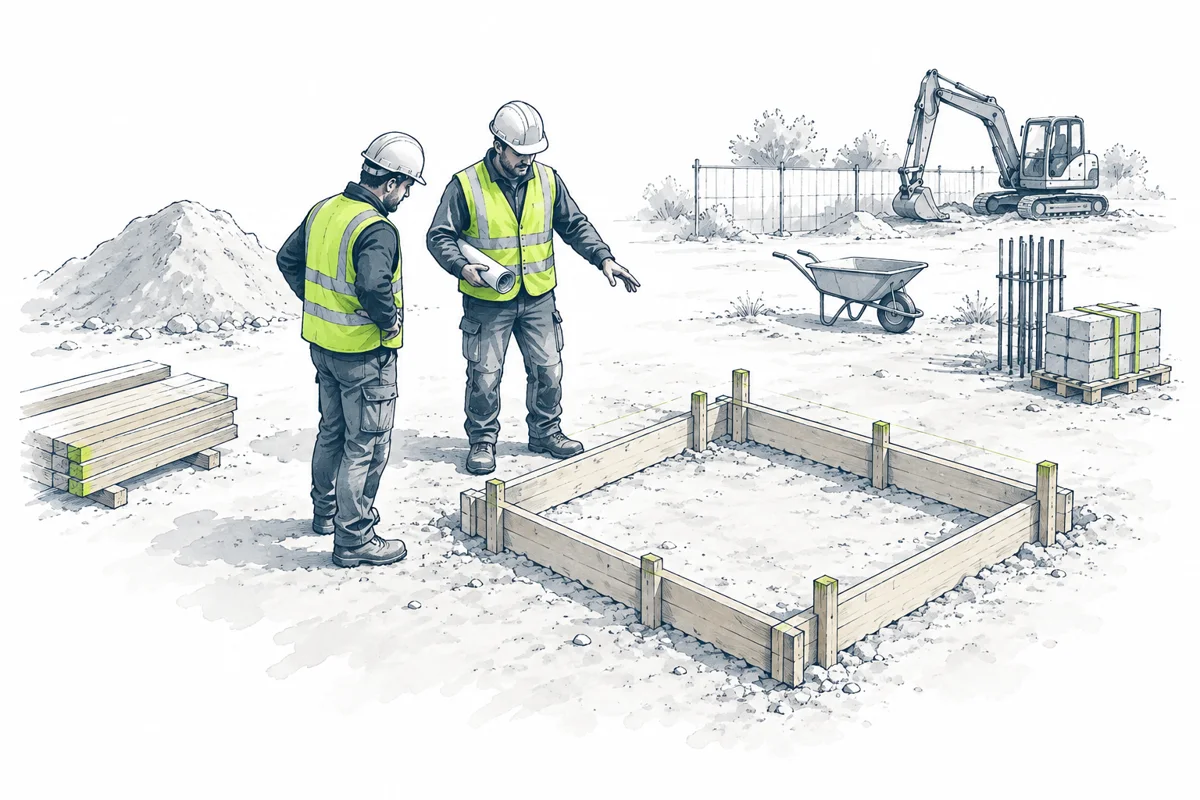
Make one current pour preparation
Record which part is poured, which drawing applies and who checks the preparation. Check whether recesses, anchors, collapsed parts and connections are coordinated with other disciplines. Resolve conflicts before the concrete comes. After all, a final adjustment to a pipeline route can have an impact reinforcement or coverage. Keep one recognizable version of the plan on the construction site.
Check the substrate, formwork and reinforcement
Have it checked whether the actual situation matches the design. Check sizing, formwork support, prescribed reinforcement and spacers. Pay attention to areas that become invisible after the pour. If there is any doubt about a connection or unexpected surface, it must first become clear which assessment is required. The checklist helps organize the consultation and does not provide substitute reinforcement dimensions or design rules.
Plan delivery and construction
Discuss the required concrete specification, quantity, accessibility and pouring method with the executor and supplier. Ensure that people and equipment are available for controlled processing. Check the delivery note and have any deviations assessed. Follow product and safety instructions and protect skin and eyes from contact with wet concrete. Improvising mixture or working method can change quality and feasibility.
Curing is part of the work
Preventing fresh concrete from losing moisture too quickly is an important goal curing. Wind, sun, temperature and concrete mixture influence the approach. So plan the protection before the pour and maintain it for as long as the agreed method requires it. If the weather is unusual, please tune again. The required curing and the strength for load are different points of interest; both belong in the implementation agreements.
Check the result and keep evidence
Record pour date, delivery, checks and deviations. Check dimensions and cast parts before follow-up work. Discuss visible gravel nests, cracks or damage with the responsible expert before repairs or finishing takes place. Ask for an appropriate recovery method when necessary. Save the outcome and revisions in the construction file, so that later work can be based on the correct information.
Your preparation in four steps
- Check the latest drawing and pour location
- Record the inspection before pour
- Coordinate delivery, processing and protection
- Register deviations and release
Frequently asked questions on this topic
Can I add extra water?
Do not change the delivered concrete composition on your own initiative. Coordinate processability with supplier and executor.
When can the formwork be removed?
That depends on the part, the achieved strength and the implementation agreements. Stripping and fully loading are different decisions.
Why take photos before the pour?
Then reinforcement, anchors and collapsed parts are still visible. Photos support the file but do not replace substantive checks.
View the associated structural calculation, create your preparation list or take the guides and checklists along to the consultation.
View all constructions and construction guides · All types of structural calculations
Sources and further checking
More information: Betonhuis: curing concrete.